

MagiFloater

Building a Full Actuator Family on Precision Force Control: How RobustMotion Is Seizing the High Ground
Published:
2022-10-10
(The following article is republished from GGII Robotics.)
Affected by the pandemic and tense international relations, growth in the intelligent manufacturing sector slowed in the first half of 2022, yet some companies still grew against the trend - RobustMotion was one of them.
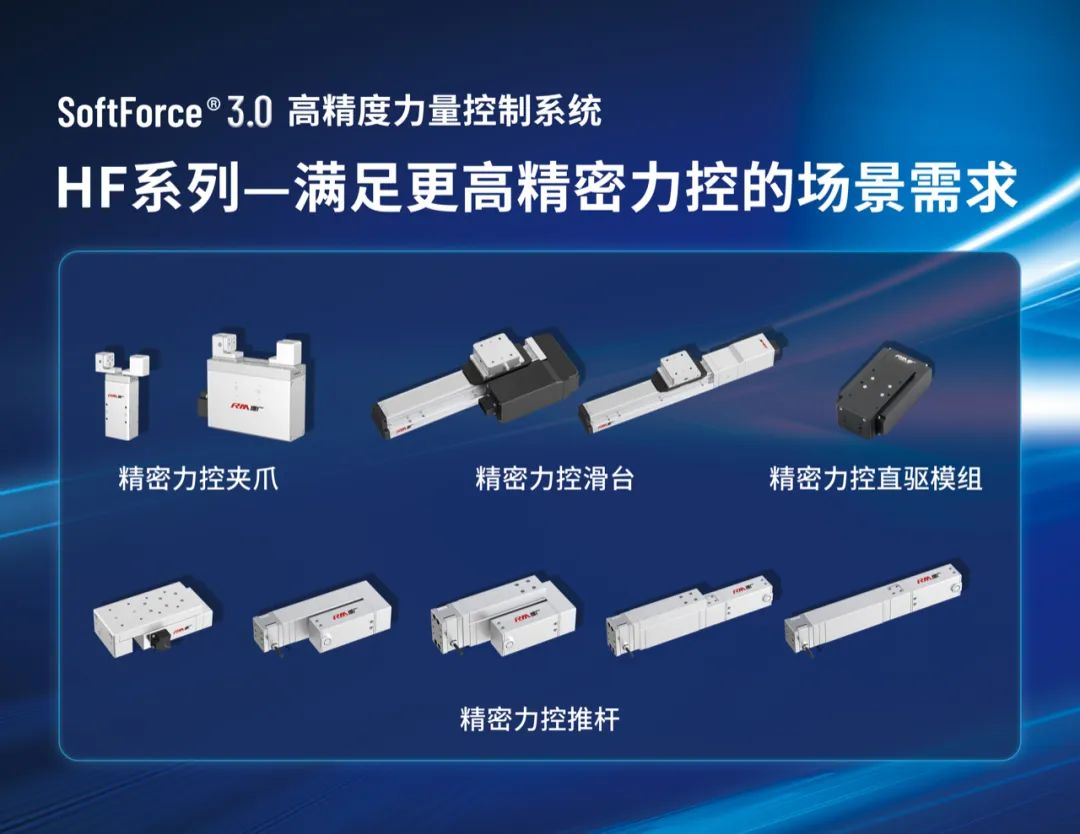
Founded in 2018, RobustMotion is a Chinese manufacturer of precision force-controlled actuators. Built on its proprietary core motion-control algorithms, electronic circuits, software design and high-precision force-control technology, its self-developed, self-produced actuators - electric grippers, electric screw-driven cylinders, electric slides and rotary actuators - feature high intelligence, high flexibility and high precision, fitting the precision-manufacturing needs of cutting-edge industries such as 3C electronics, automotive and medical devices, and earning the recognition and support of more than 1,000 customers including BYD, Foxconn, BGI manufacturing and Lingyi iTech.
In the first half of 2022, RobustMotion's performance grew year on year. Its electric grippers, screw-driven cylinders, slides, direct-drive actuators and servo controllers were applied in volume across 3C electronics, automotive and other industries, while medical applications, following project validation in 2021, also entered volume production and shipping.Among them, the high-end actuator products based on SoftForce® precision force-control technology have met a warm market response, with more and more companies seeking to solve existing process problems through precision force-control technology.
What is behind RobustMotion's rapid growth? What is the significance and necessity of precision force control? And how broad are the applications of SoftForce®-based actuators? In this article, GGII Robotics held an in-depth conversation with RobustMotion founder & CEO Huang Anjie to find out.

As the demographic dividend fades and labour costs surge, with the pandemic flaring up repeatedly, manufacturing's evolution toward intelligent manufacturing has become inevitable - robots deployed in factories have addressed the question of whether labour exists at all, butcertain fine-operation steps and processes remain lowlands for intelligent manufacturing applications。
To break the limits of precision applications, companies began trying every approach: mounting force, optical, tactile and other sensors on robots while continually optimising motion-control algorithms so robots could meet fine-operation requirements. Yet load, speed and precision have always been hard to combine. Collaborative robots equipped with six-axis force sensors gained force-control capability usable for grinding and large-part assembly, but when force control has to be refined enough to perform tasks such as assembling tiny components, the working speed and precision may no longer meet production targets.
Huang Anjie analyses:The widespread application of robots and actuators across industries corresponds to the question of whether productivity exists at all; combining robots and actuators with various kinds of sensors is about how to build excellent productivity. Without force sensors there is no force feedback, and robots or actuators can have no sensing function whatsoever. Actuators based on SoftForce® precision force control differ from the common current-loop or direct-drive approaches: they keep load, speed, positional accuracy and force-control accuracy in an excellent balance, widening actuator applications to ever more precise operating scenarios.”
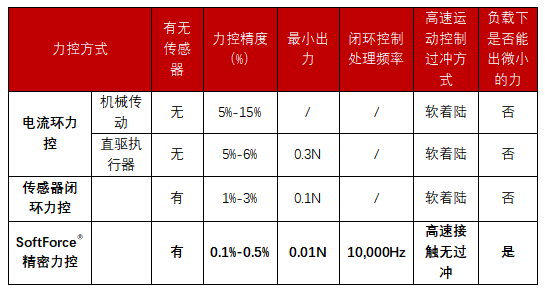
Specifically,there are two traditional force-control approaches. The first iscurrent-loop force control, which achieves force control by regulating the current inside the motor. It is relatively easy to implement and can deliver force control within a 5%-15% accuracy range, but motion speed is slow, transmission cannot be back-driven, and small forces cannot be produced under load, so it fails scenarios with stricter accuracy requirements; and after a period of use, mechanical wear brings errors and accuracy falls further. Even with direct drive - reducing transmission friction to obtain relatively precise, tiny forces - the minimum output is no less than 0.3 N. Such actuators also usually have no sensor, and even when one is fitted it does not take part in control.
The other issensor-based closed-loop force control, which adds a conventional force sensor and a conventional closed-loop control algorithm. Accuracy improves over current-loop force control, but speed remains slow. Overall, this approach can raise force-control accuracy from 5% to 1%. However, without correct algorithm handling, or when the sensor is not fast enough, overshoot easily occurs - the force output exceeds the final steady-state value - and the direct consequence is a lower final yield.
Compared with conventional force control, SoftForce® precision force control differs fundamentally in three aspects: whether a sensor is paired with the system, how high the control frequency is, and whether the load affects the position and magnitude of the output force.
*Micro forces can be produced even under heavy loads
Taking RobustMotion's precision force-control technology as an example: by combining a high-speed force sensor with a model-predictive control algorithm, SoftForce® 3.0 precisely controls torque through near-real-time force feedback, and the actuator automatically recognises its own position and its contact state with the workpiece - giving it human-hand-like intelligence in force sensing, control and execution.
“The 'digital twin' concept people often mention today - in fact our model-predictive control algorithm is one concrete way of realising it. Through complex motion-data simulation and modelling we achieve rapid self-learning and dynamic adjustment, and thereby precise, high-speed control and execution at the physical level,Huang Anjie added,We proposed and successfully implemented the SoftForce® precision force-control technology as early as 2019, upgrading the electric actuator into a robot-like mechanism with sensing intelligence.
To date, RobustMotion's SoftForce® precision force-control technology has evolved to version 3.0, making actuators faster, force control more precise, with force control across the whole stroke, andfive major advantages:
1. High processing frequency and instantaneous force feedbackfor better performance. Reportedly, the common market approach of 'six-axis force sensor + robot' has a computation cycle of about 5-10 ms and a processing frequency of 100-200 Hz, while the SoftForce® 3.0 precision force-controlled actuator reaches 10,000 Hz (one closed-loop computation every 0.1 ms), 50-100 times the force-control processing frequency of ordinary robot systems. (Processing frequency here refers to the closed-loop control frequency; the underlying force sensor's bandwidth and resolution are in fact far higher.)
2. Highly compliant force controllets the actuator react instantaneously to external forces, achieving active compliant force control: even when external forces are encountered during motion, it adjusts in time, making process completion more precise and better protecting the workpiece.
3. High frequency, high speed, no overshoot. Even under high-frequency, high-speed motion, the actuator maintains high output-force accuracy while guaranteeing no overshoot, contacting parts at high speed with tiny forces for compliant pick-and-place and avoiding damage to precision fragile parts.
4. Stronger overload resistance. Based on deep understanding of shop-floor processes and repeated iteration, RobustMotion's precision force-controlled HF series - fully upgraded this past February - adopts an integrated sensor design whose overload resistance is 4-8 times better than before, with higher durability, handling more complex working conditions with ease.
5. Micro forces and large outputs at the same time. Precision force-controlled slides and screw-driven cylinders with long stroke and heavy load, equipped with the SoftForce® 3.0 high-precision force-control system, can produce tiny, precise forces under heavy loads while also delivering large forces - a wider output range, i.e. a wider dynamic force range.
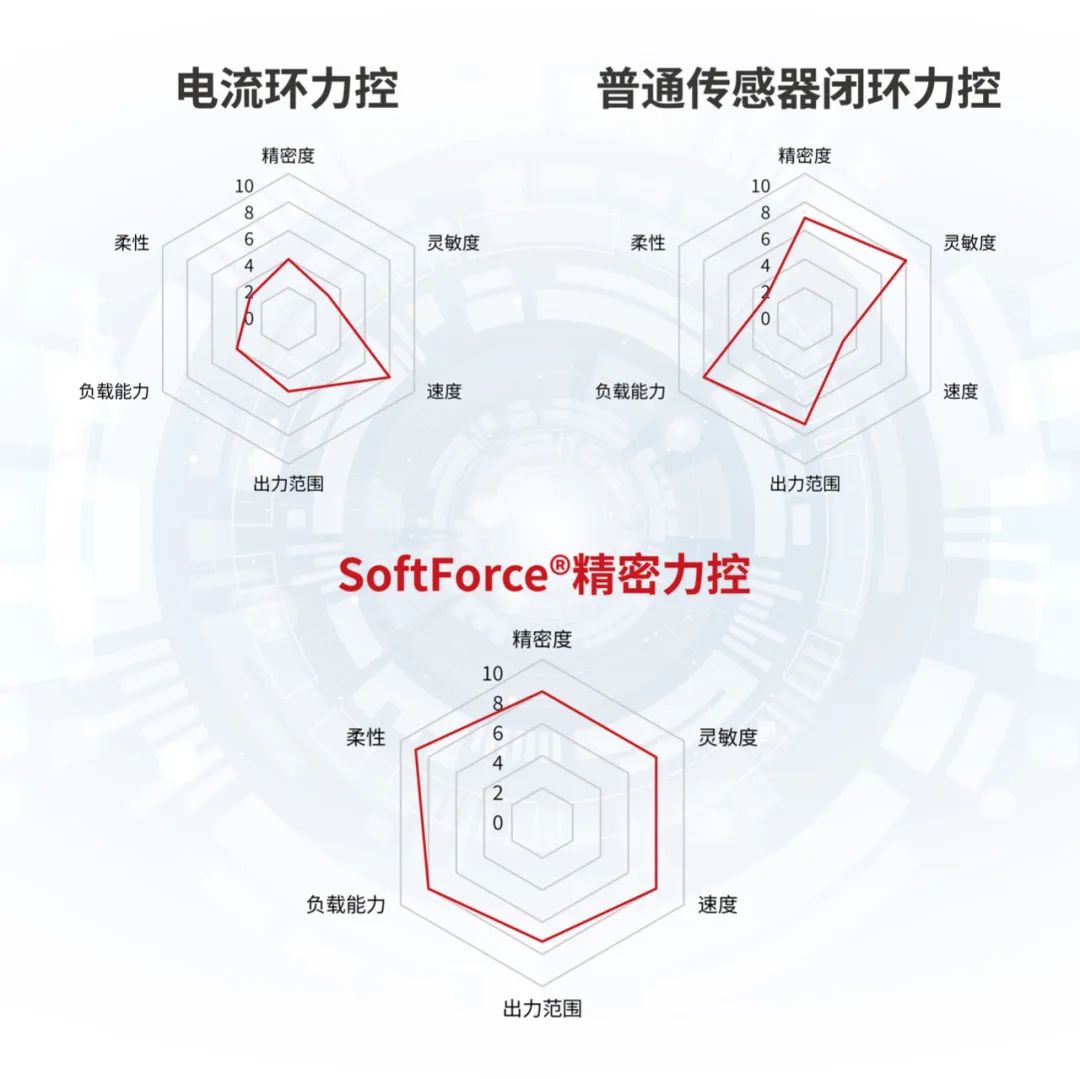
Speaking of the overall advantages of precision force control,,Huang Anjie said: SoftForce® precision force control is an innovative control-technology system - more accurately, the sign that actuator application technology has reached another level. Operations and scenarios in which machines once could not replace human hands can now be realised on SoftForce® precision force control.
For example, sensor-assisted screw-driven cylinders found it very hard to avoid overshoot during pressing; with our products, even when the load increases, they still output precise, tiny, constant force - achieving high quality in precision thermode welding, precision press-fitting and bonding, constant-force holding, flexible ribbon pre-fold forming and more. In assembling tiny components, current-loop force control struggled because the demands on force-control stability and reliability are so high, but SoftForce® does it very well. Thus, built on SoftForce® precision force-control technology, RobustMotion's actuator products advance from mere productivity to excellent productivity, empowering production lines.
In intelligent manufacturing, machine vision often serves as the eyes: a robot equipped with machine vision can plan its own routes and avoid obstacles.So what does precision force-control technology mean for intelligent manufacturing? It may be the part that acts as the fingers, completing precision operations once thought impossible.
The main application fields of precision force control include 3C electronics, semiconductors, medical, automotive, auto parts, new energy and new materials - and the more demanding a field's precision, the greater its need for precision force control.
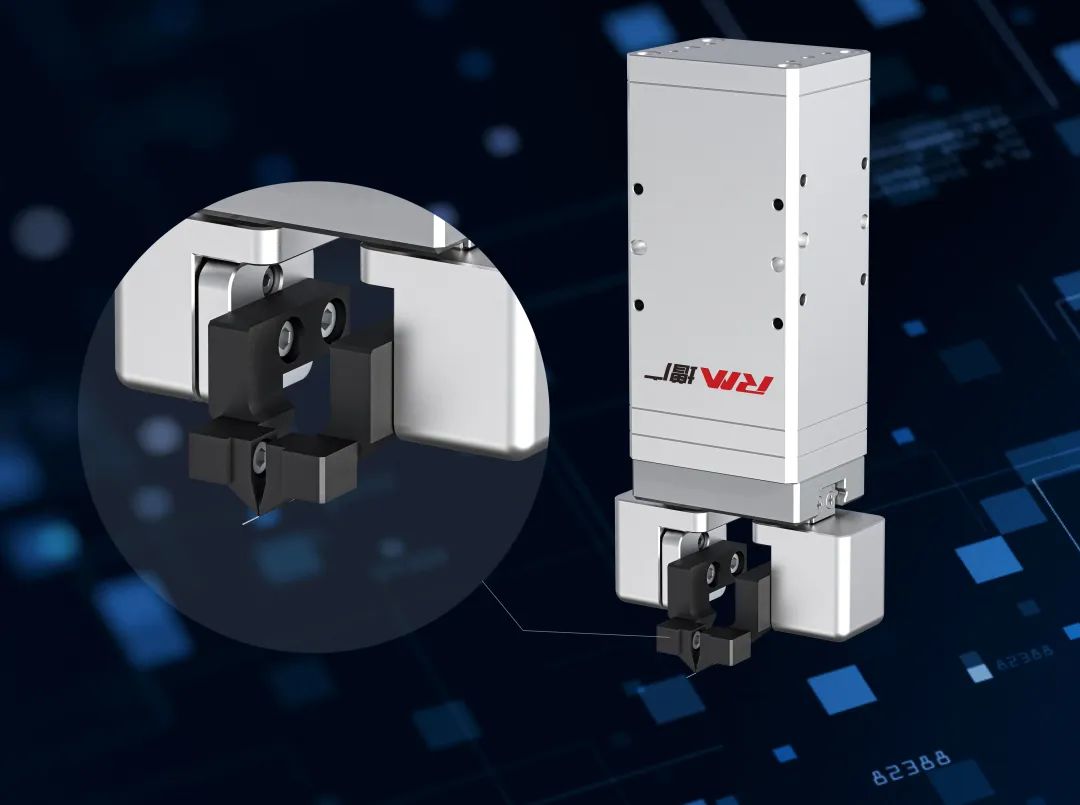
*RM RobustMotion's precision force-controlled miniature gripper grasping a tiny, fragile optical fibre tube
Specifically,in the 3C electronics industry, precision force-control technology enables transfer, assembly, press-fitting and bonding, strength testing, sensitivity testing and reliability verification of precision miniature electronic components, meeting the demand for high-precision, highly flexible and highly reliable intelligent production.
Take the IPEX cable terminal crimping process as an example: the metal head of an IPEX terminal is extremely small and easily deformed, and the port it must be pressed into is equally tiny - even a slight positional error means it will not go in, and once pressed in the terminal locks and must never be pulled out again, demanding extremely high position and force-control accuracy; any slip damages the yield of the whole machine. For years, one IPEX terminal crimping line required several workers in close coordination, whereas SoftForce® precision force-control technology now makes robots replace humans in this task.
Built on SoftForce® precision force-control technology, the RM-CEU integrated drive-and-control servo controller, the precision force-controlled electric slide (RM-RPLA-F) and the miniature electric gripper (RM-MGBD), RobustMotion's precision force-control solution uses advanced control algorithms and fast algorithmic response to grip the terminal compliantly (force-control accuracy of ±0.01 N), search positions automatically under fast, precise force control, and then press-fit compliantly - the whole process takes only 6 s with zero damage to the workpiece.
In new energy and related industries, SoftForce® precision force control enables lithium-battery thickness inspection, cell compliant picking and cell compliant casing insertion.
In the cell casing-insertion process at a certain battery company: traditionally cells were pressed into cases with pneumatic cylinders, easily causing overshoot or uneven pressing force that scratched the cell and the mylar film and hurt yield. By adopting RobustMotion's screw-driven cylinders with precision force-control technology, combined with miniature electric grippers or miniature servo grippers, overshoot and uneven output are effectively eliminated, greatly improving yield and capacity.
In the semiconductor industry, precision force control can meet semiconductors' strict requirements on vibration, jitter and applied force, and can be applied to high-speed die bonding, die pickup, semi-finished chip transfer and SMT placement; in the automotive industry, it can be used for assembling tiny interior components, testing automotive safety sensors and transferring automotive mechanical parts; in biomedicine, for precision surgical robots and precision laboratory instruments, and so on...
Huang Anjie concluded:Many people see precision force control as a small market with a narrow scope, assuming the more precise a technology is, the narrower its applications. In fact it is the opposite: precision force control turns what could not be done before into what can be done now.To date, RobustMotion's precision force-control technology has been widely deployed in 3C electronics, medical, automotive and other industries, serving more than 2,000 customers, with a continually rising repurchase rate.
The name RobustMotion (Zengguang) comes from the 'augmented matrix' of linear algebra, reflecting that we have always been a technology-driven company. 'Zeng' (augment) represents our continual breakthroughs to new heights in precision force control; 'guang' (broad) refers to how, as a provider of critical core components, we constantly widen the application dimensions of our products.
Going forward, RobustMotion will continue to focus on precision force-control technology, solving customers' real deployment problems in their application scenarios, providing one-stop hardware and software solutions that genuinely meet their needs, and creating greater added value for customers.
Overshoot? Nonexistent! SoftForce® 2.0 precision force control, the actuator world's 'all-round champion'
High compatibility, easy drive control | RobustMotion receives the 'Best Compatibility Award for Chinese Robot End-Effectors'
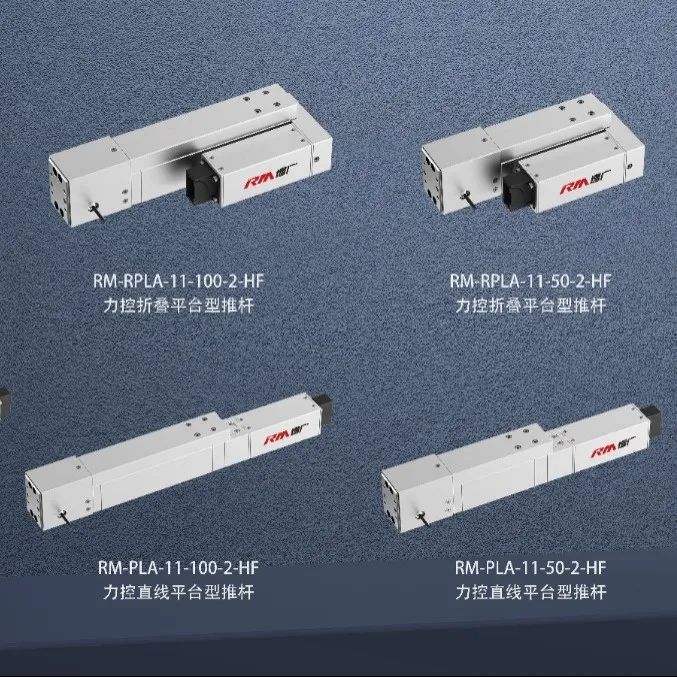
Application boundaries widen again: RM RobustMotion's precision force-controlled intelligent actuators fully upgraded
A new breakthrough in force-control black technology: force-control performance approaching the human hand
Click the original-article link todownload the latest product materials.












