
MagiFloater
Multi-Mover Task Coordination: Supporting Multiple Production Rhythms on a Single Working Plane
Published:
2026-10-10
When multiple workpieces run simultaneously inside a single machine, task priority, station occupancy, path intersections, and exception routing must all be managed together. The greater the variety of product models and process differences, the harder it becomes to organize every motion around a fixed sequence.
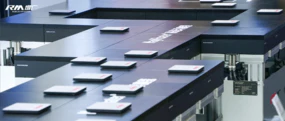
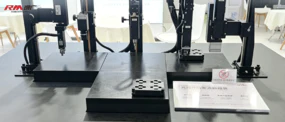
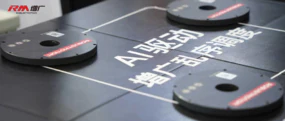
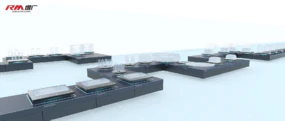
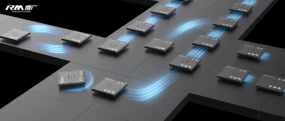
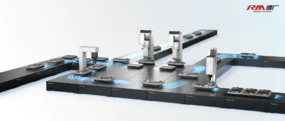
MagiFloater® Planar Motor System is a modular planar magnetic levitation conveying system that enables multiple movers to operate independently on the same working plane, using intelligent simulation and scheduling software to orchestrate process stations, paths, and tasks so multiple movers can execute different production tasks simultaneously.
What Is Multi-Mover Task Coordination?
Multi-mover task coordination means multiple movers each carry workpieces on a shared working plane while scheduling software centrally manages station access, path routing, and task destinations—allowing different products to flow in parallel along their own process routes.
Unlike conventional fixed-takt conveyor lines, multi-mover coordination neither requires all movers to visit stations in the same order nor forces them to advance synchronously at identical speeds. Each mover is bound to a specific workpiece task and executes distinct operations based on product model and recipe.
Each Mover Executes Its Own Workpiece Task
Once a mover enters the system carrying a workpiece, it executes tasks tailored to the product model and recipe:
- For products requiring dispensing and inspection, the mover visits the dispensing station and inspection station in sequence;
- For products requiring assembly only, the mover proceeds directly to the assembly station;
- Sampled workpieces are routed to the quality inspection zone;
- Defective or anomalous workpieces are routed to re-inspection or designated unloading positions.
As a result, a single working plane handles diverse products and process routes concurrently without movers waiting needlessly on one another.
Coordination Also Enforces Operational Order
Independent motion does not mean uncoordinated movement. Multi-mover coordination defines four clear categories of operating rules:
- Station Admission:Which movers may enter a given station and at what timing;
- Queuing Positions:Where other movers queue while a station is occupied;
- Intersection Priority:Right-of-way sequencing when multiple paths cross;
- Downstream Routing:Which station or unloading point a mover proceeds to once a task finishes.
Safe inter-mover spacing and right-of-way are centrally governed by the scheduler, ensuring independent operation never compromises system order.
Offline Simulation and Online Scheduling
System scheduling capabilities span two stages:
- Offline Simulation:Performed prior to commissioning by inputting product mixes and process routes to evaluate cycle time, bottlenecks, and station utilization—comparing layout options during system design;
- Online Scheduling:Executed in real time during machine operation, assigning tasks based on live product counts and station status to adapt production flow dynamically as product ratios shift.
Simulation answers "Is this layout feasible?" while online scheduling answers "Where should this workpiece go right now?"
Mixed-Model Production: Co-Line Production of Two Products
Consider co-line production combining a product requiring dispensing plus inspection and another requiring assembly only:
| Comparison Dimension | Conventional Fixed-Takt Line | MagiFloater® Multi-Mover Coordination |
|---|---|---|
| Flow Differentiation | Fixed takt with mechanical diverters | Dynamic allocation via task rules |
| Product Mix Shifts | Congestion on some branches, idle stations elsewhere | Station workload adapts to live product mix |
| Changeover | Modify mechanical structures or line takt | Update task rules and process recipes |
| Exception Handling | Manual removal or end-of-line batch sorting | Rule-based routing to re-inspection or designated reject points |
When the product mix changes, engineers can reassess task rules and station capacity without rebuilding line mechanics—making task-driven flow ideal for frequently changing product portfolios.
Production Rules to Define During System Design
Effective task coordination rests on explicit production rules established during planning:
- Process Sequence:Which operations have strict dependencies and cannot be skipped;
- Parallel / Alternative Stations:Which stations can handle the same process step;
- Maximum Wait Time:The longest allowable dwell time for a workpiece at a given location;
- Exception Routing:Where defective or anomalous workpieces should be directed;
- Product Priority:Tie-breaking priority when multiple products compete for the same station.
Constraints on temperature, residence time, or batch integrity are also preserved as scheduling rules. The scheduler's purpose is ordered flow within process constraints—not merely chasing shortest geometric paths.
Frequently Asked Questions
How does multi-mover coordination differ from a standard multi-station conveyor?
Conventional conveyors typically run at a fixed takt where every workpiece passes identical stations in the same order; in multi-mover coordination, each mover has independent paths and speeds so different products follow distinct routes.
Does product changeover require physical line modification?
In most cases, changeovers are completed by updating task rules and process configurations without altering mechanical hardware.
Will movers collide with one another?
Inter-mover safety spacing and intersection right-of-way are centrally enforced by the scheduling system.
Which production tasks benefit most from multi-mover coordination?
Multi-model mixed-line production, sampling and re-inspection workflows, parallel bottleneck stations, and lines with frequent order mix changes.
The MagiFloater® Planar Motor System provides a programmable motion platform for multi-task orchestration. The clearer your process rules, the greater the value unlocked by mover coordination—keeping equipment running smoothly across mixed-model production, sampling inspection, and shifting order demands.