MagiFloater

How Do Cost-Effective Electric Grippers Help Production Lines Cut Costs and Boost Efficiency?
Published:
2025-11-12
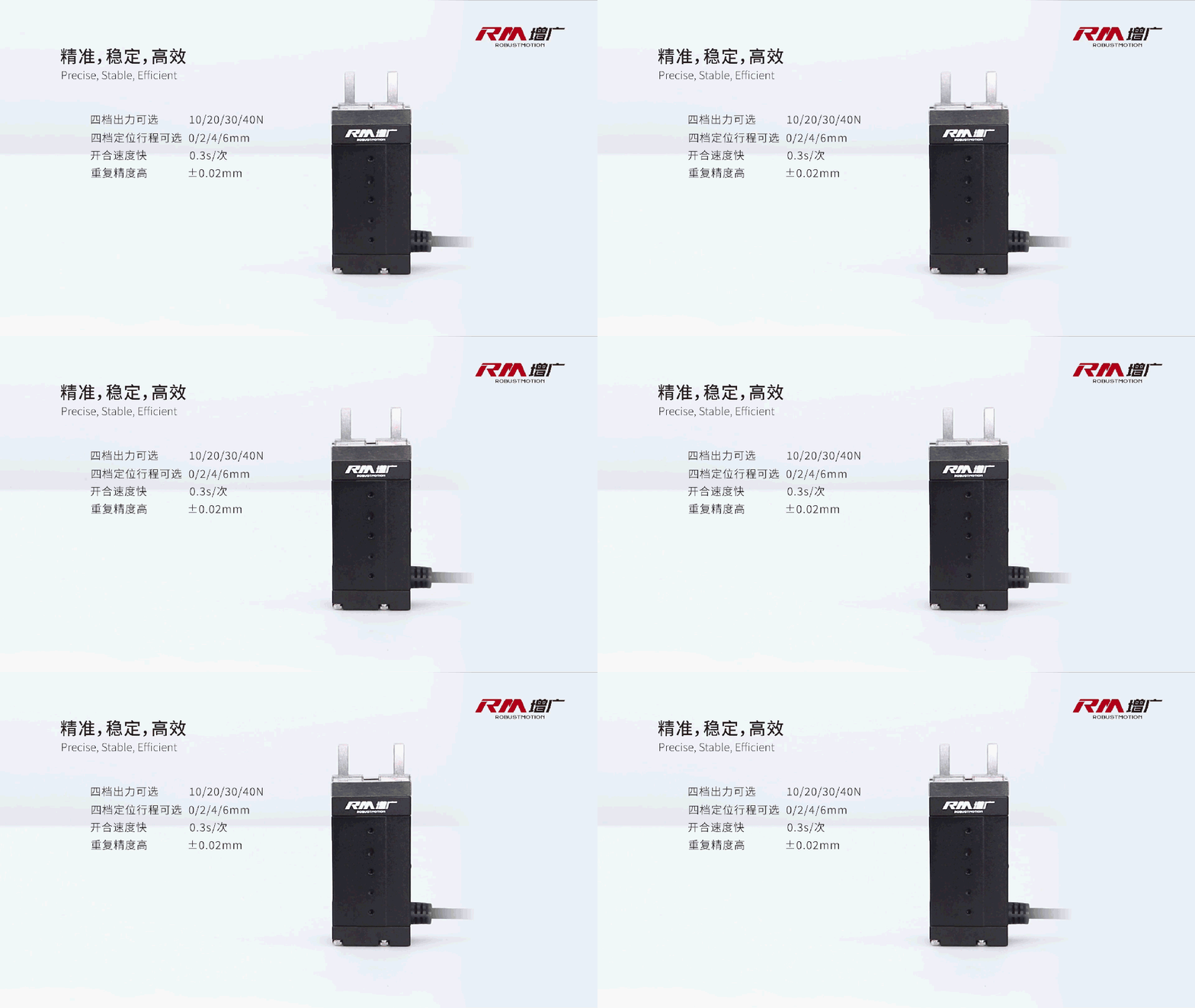
When evaluating automation components, experienced decision-makers look beyond unit purchase price and assess Total Cost of Ownership (TCO). This encompasses initial capital expenditure, integration and commissioning, long-term operation, and production efficiency. Represented by RobustMotion's RM-EGB series, cost-effective electric grippers deliver substantial cost reduction and efficiency gains by optimizing performance and expenses across the entire lifecycle.
Cost Reduction: Comprehensive Optimization from Initial Setup to Long-Term Operation
Lowering System Construction Costs
Competitive Procurement Cost: RM-The EGB series is priced in the same range as mid-to-high-end pneumatic grippers (including solenoid valves, fittings, and accessories), breaking down the price barrier of electric actuation.
Eliminating Air Supply Infrastructure: Choosing electric grippers means users no longer need to invest in air compressors, solenoid valves, 、filters, or complex pneumatic piping. For new production lines or standalone workstations, this saves considerable capital expenditure.
Lowering Integration and Commissioning Costs
Simplified Electrical Design and Wiring: RM-Featuring an all-in-one integrated design, the EGB requires only a single cable for both power supply and control, whereas pneumatic solutions demand dual routing of air tubes and electrical wires. This simplifies system design while reducing on-site installation and troubleshooting complexity.
Shorter Commissioning Time: RM-The EGB features multiple built-in presets for gripping force and stroke that engineers can trigger directly via simple I/O signal combinations—eliminating complex servo parameter tuning and repetitive manual throttle valve adjustments required by pneumatic grippers, significantly shortening commissioning cycles and accelerating project deployment.
Lowering Long-Term Operation and Maintenance Costs
Substantial Energy Savings: Electric grippers consume power only during motion, achieving true energy-on-demand operation. By contrast, pneumatic systems suffer continuous energy losses from low compression efficiency and air line leaks. Under equivalent operating conditions, RM-the energy consumption of the EGB is only about one-fifth that of a comparable pneumatic gripper, yielding substantial electricity savings over long-term operation.
Reduced Maintenance Costs: Filters and seals in pneumatic systems are wear parts requiring routine maintenance and replacement. Driven purely by electricity, the EGB is virtually maintenance-free, reducing spare parts inventory and maintenance labor costs.
Efficiency Gains: Boosting Productivity and Line Flexibility with Built-In Intelligence
Improving Overall Equipment Effectiveness (OEE)
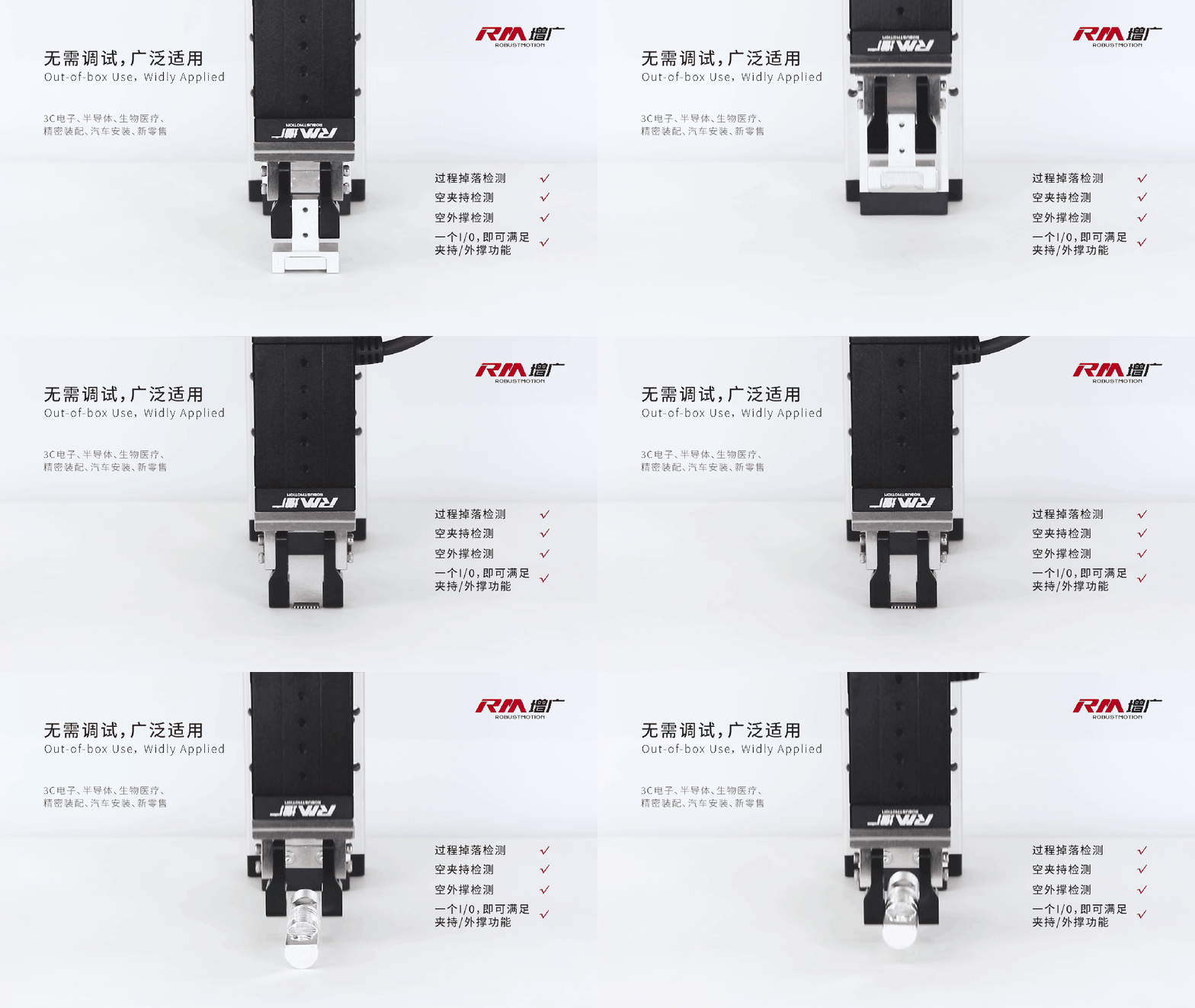
The EGB's built-in "empty grip / part drop detection" immediately identifies material anomalies during production. By sending alarm signals to the host controller, it prevents downstream stations from performing wasted dispensing or labeling on empty slots, reducing idle machine cycles and exception handling time while directly increasing effective output.
Enhancing Line Flexibility and Changeover Speed
Both the gripping force and stroke of the EGB can be adjusted via software commands. When a production line needs to switch to manufacturing different models of product workpieces, operators do not need to replace the end-of-arm tooling; they simply call new parameters in the program to complete the changeover within a short time. This multi-purpose line capability drastically shortens changeover downtime and strengthens rapid response to orders for different specifications of products.
The value of a cost-effective electric gripper goes far beyond basic gripping. Taking the RM-EGB series as an example, once system construction, integration, commissioning, long-term energy use, and maintenance are factored in, it demonstrates comprehensive cost advantages over traditional pneumatic solutions while boosting productivity and flexibility through built-in intelligence. Choosing the RM-EGB is therefore not just an economical initial investment, but a solid foundation for lifecycle cost reduction and efficiency enhancement across the entire production line.