

MagiFloater

Precision Assembly Applications of Flexible Grippers in the 3C Electronics Industry
Published:
2025-11-25
The 3C electronics manufacturing sector (consumer electronics, computers, communications) shows distinctive characteristics: short product life cycles, highly integrated, thin and light components, and a high proportion of high-value, fragile parts. These traits place stringent demands on automated assembly processes, especially at the end-effector stage. Traditional rigid grippers or vacuum suction solutions, when handling diverse, high-precision 3C components, face bottlenecks such as poor compatibility, easy damage and low yield. This article analyzes in depth how flexible grippers, with their core technology, systematically solve the technical challenges in three typical precision assembly scenarios in the 3C industry.
1. Application scenario: PCB/FPC pick-and-place and handling
Process challenges: Printed circuit boards (PCBs), especially flexible printed circuit boards (FPCs), are thin, soft, easily deformed and covered with high-density sensitive components. Traditional vacuum suction cups tend to cause board warpage or stress on components due to uneven suction, while rigid grippers struggle to provide stable gripping without damaging board edges or components.
Flexible gripper solution and technical principle:
1. Wrap-around adaptive gripping: The multi-link structure of the flexible gripper enables large-area wrap-around contact from the side of the PCB/FPC, rather than point or line contact. This surface contact distributes gripping force evenly, effectively avoiding local stress concentration and eliminating physical deformation of the board.
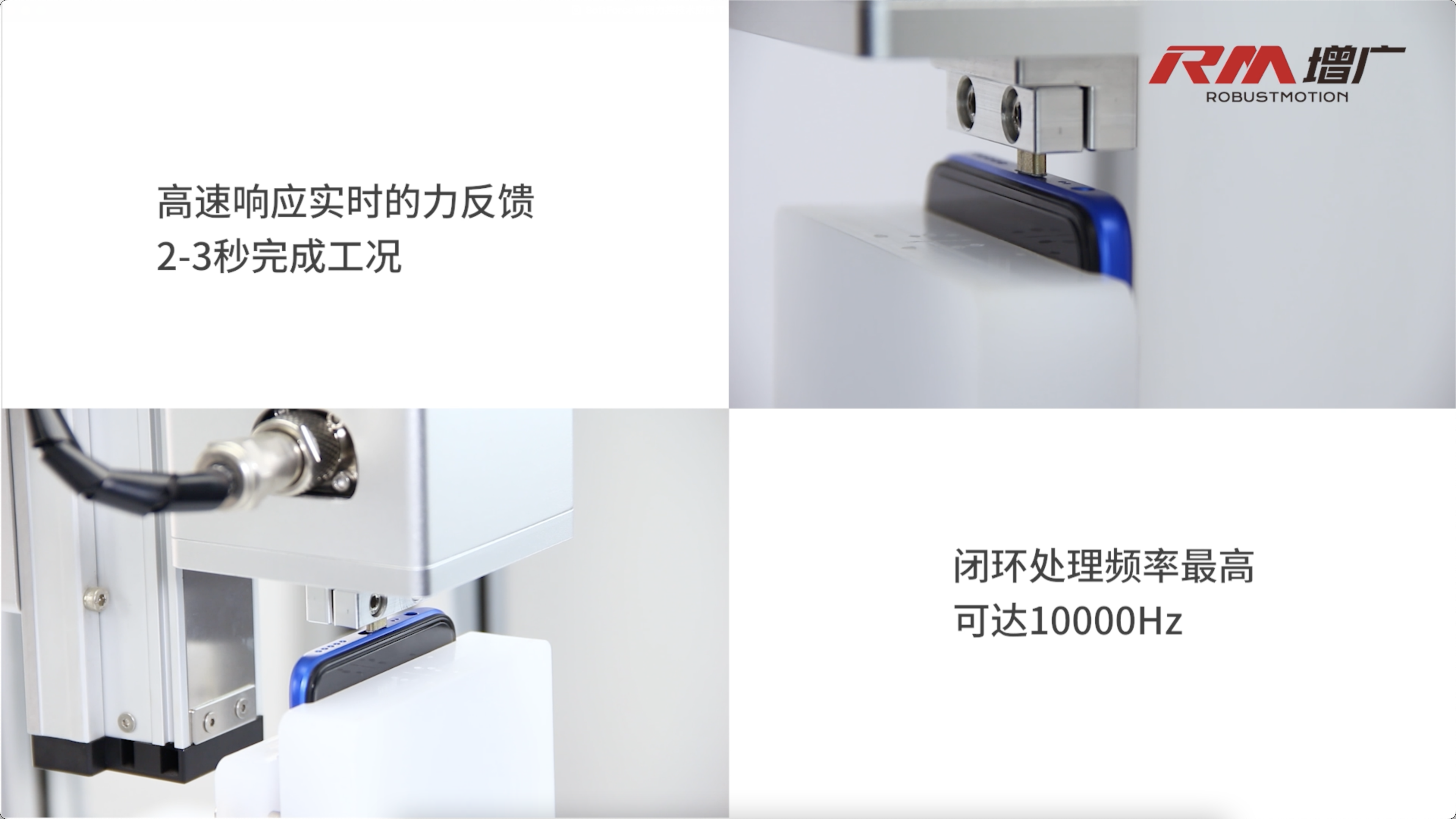
2. Precise force control: Through an integrated force sensor and closed-loop servo control, the flexible gripper can precisely control the force applied to the board edge at the Newton (N) or even gram-force (g) level. A force value can be set that ensures stable gripping while remaining far below the component solder strength or board damage threshold. During the acceleration and deceleration phases of high-speed motion, the force control system also compensates in real time to maintain constant gripping force and prevent slipping.
2. Application scenario: precision connector insertion and extraction
Flexible gripper solution and technical principle:
1. Force/position hybrid control mode: The flexible gripper controller supports a force/position hybrid control strategy. During assembly, the robot first moves the gripper to the predetermined position (position control mode); at the moment insertion begins, the gripper switches to force control mode. The controller monitors force feedback in the Z-axis direction in real time; when the force reaches the preset “in-position characteristic force value” or an “abnormal resistance peak” appears, it immediately stops motion and reports status to the host controller.
2. “Alignment” and compliance: Working with a vision system, even if there is a slight incoming pose deviation, the adaptive structure and compliant force control of the gripper allow small passive float in the X-Y plane when contacting the connector shell, performing mechanical alignment and guiding the connector smoothly into the port, improving assembly success rate and robustness.
3. Data collection and quality traceability: The force-displacement curve of the entire insertion process can be fully recorded. By analyzing the characteristics of these curves (such as peak force and in-position travel), 100% in-line inspection and data traceability of each assembly can be achieved, providing a quantitative basis for process optimization and quality control.
3. Application scenario: handling and assembly of high-gloss/curved structural parts (phone midframes, back covers)
Process challenges: Appearance parts such as phone midframes and glass/ceramic back covers have surfaces treated by anodizing, PVD, high-gloss polishing and similar processes, with zero tolerance for appearance defects such as scratches and indentations. These components often also have curved surfaces, making stable, damage-free contact difficult with conventional fixtures.
Flexible gripper solution and technical principle:
1. Controlled contact mechanics: Through precise force control, the flexible gripper ensures the normal force applied by the fingertips to the workpiece surface is strictly limited to the lowest level. Even when the robot runs at high speed, indentations caused by excessive inertial force are avoided.
2. Optimized contact materials: Finger covers use polymer materials such as polyurethane or silicone with low hardness, high friction coefficient and high wear resistance. These materials themselves do not scratch high-gloss surfaces, while providing sufficient friction to ensure gripping stability — resolving the core contradiction of “grip firmly without leaving marks”.
3. Curved-surface adaptability: For 3D curved glass back covers or curved midframes, the wrap-around configuration of the flexible gripper naturally conforms to the workpiece curvature, forming multiple contact points that distribute gripping force. Compared with the two-point or two-line contact of rigid grippers, the gripping posture is more stable, avoiding the risk of detachment caused by vibration or rotation during handling.
In the precision assembly field of the 3C electronics industry, flexible grippers are no longer a simple “alternative” but an enabling technology for high-yield, high-flexibility automation. By deeply integrating mechanical adaptability, high-precision servo drive and closed-loop force control, they provide unprecedented reliability and flexibility for handling the diverse, material-sensitive and high-value components of the 3C industry, and are one of the key infrastructure elements supporting the industry's upgrade toward intelligent manufacturing.












