
MagiFloater

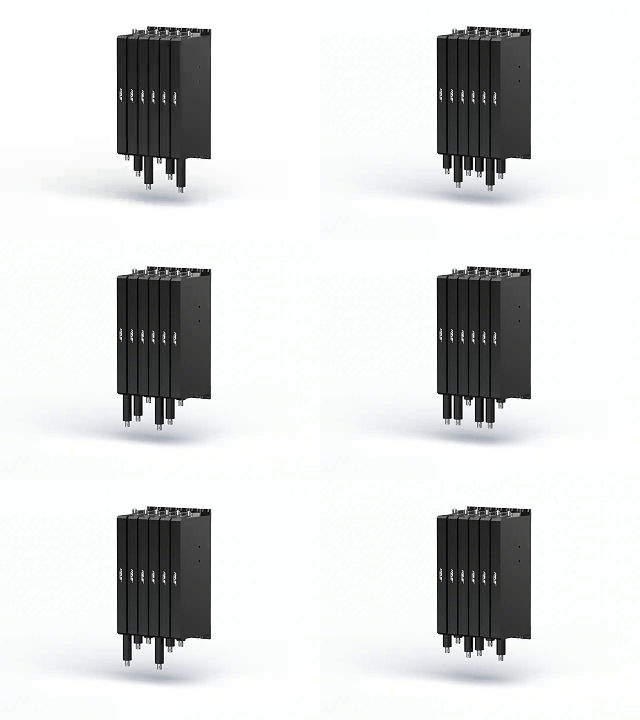
RM-ZRS Linear-Rotary Actuator: Integrated High-Precision Z-R Coordinated Motion
Published:
2025-12-18
Keywords: linear-rotary actuator, RM-ZRS, ZR module, force-controlled soft landing, chip placement, precision transfer, probe testing, high-precision electric cylinder
Article summary: This article introduces the RobustMotion RM-ZRS series linear-rotary actuator, an actuator that solves the challenge of high-speed precision transfer. By integrating high-precision linear (Z-axis) and rotary (R-axis) motion into a compact unit, it eliminates the bulk and complexity of conventional stacked modules. The article analyzes in depth its micron-level positioning accuracy, ultra-high precision force control, “soft landing” function and high-rigidity structural design, demonstrating how it simplifies systems and delivers high performance in semiconductors, 3C electronics and automated testing.
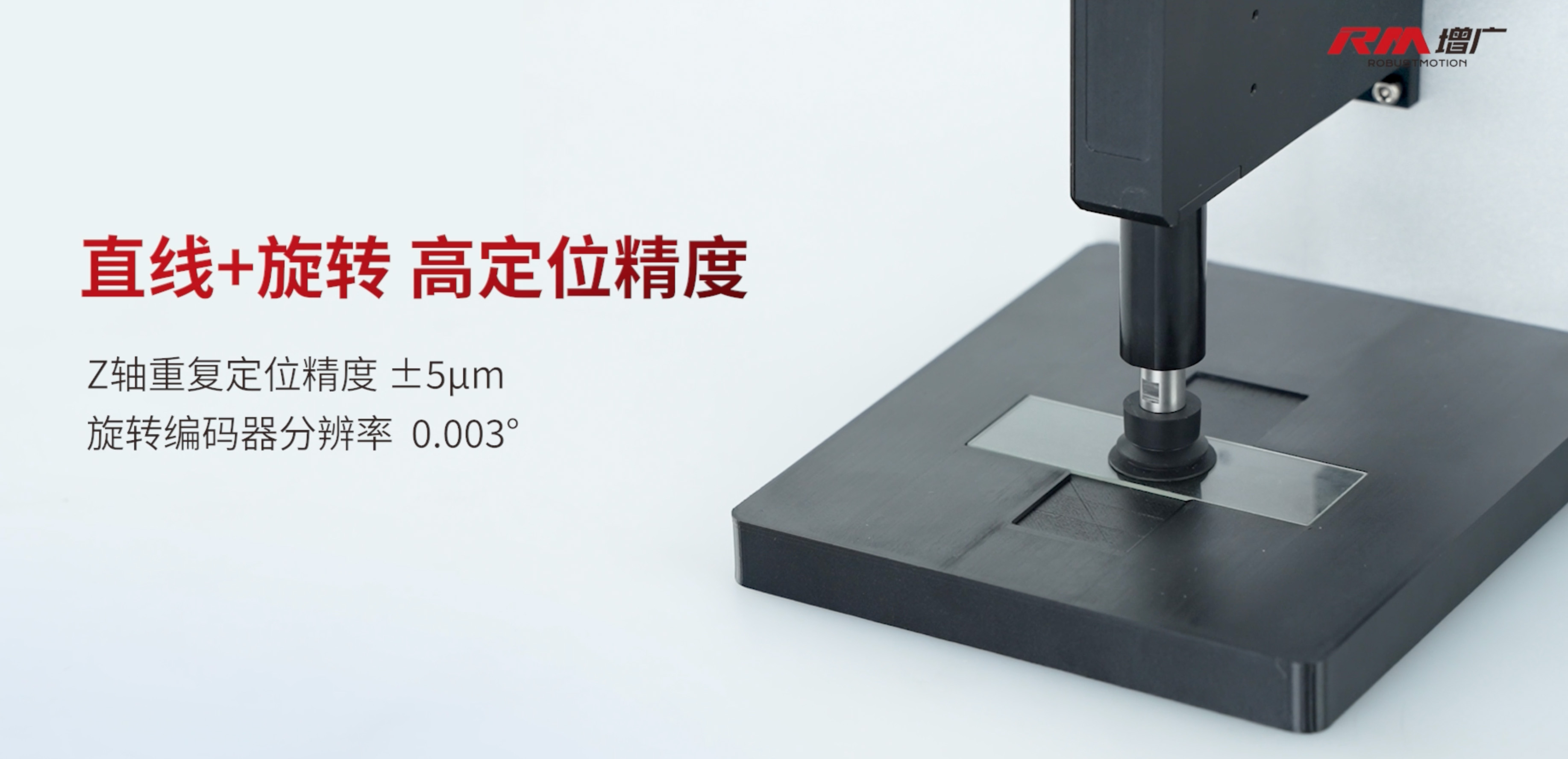
Dual high precision in linear and rotary motion
Micron-level positioning accuracy:Through a high-resolution closed-loop control system, the ZRS Z-axis repeat positioning accuracy reaches ±5 µm, while the rotary encoder resolution is as high as 0.003°. This dual high precision ensures extremely high positional consistency when performing tasks such as precision alignment, chip placement or probe testing.
High-precision, high-speed motion capability:An optimized internal drive and transmission design enables the ZRS to achieve high-speed motion while maintaining high precision, effectively shortening production cycle times and improving overall equipment efficiency.
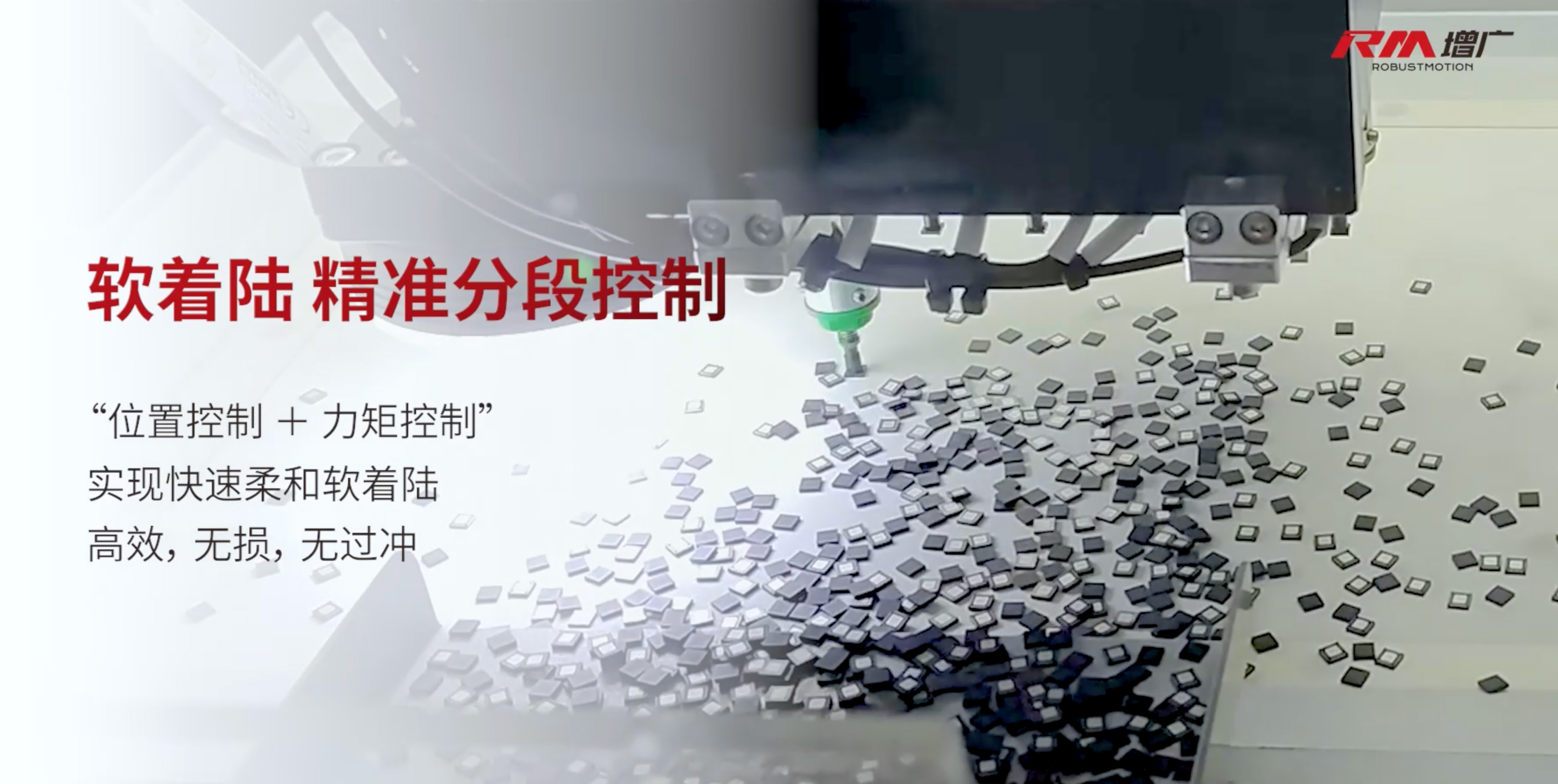
Precise force control and compliant soft landing
Precise force repeatability:The product offers highly sensitive force control capability. When performing tasks such as fine pressing, with thrust below 1N, its repeat accuracy reaches ±0.03N, ensuring stable output of very small forces.
“Position + torque” hybrid control:Through precise segmented control, the system can achieve a soft landing function of “fast approach — deceleration — compliant contact”. For example, when placing a tiny chip, the actuator can descend at high speed to above the chip, then switch to torque mode and complete placement with an extremely gentle force — the whole process is efficient, damage-free and free of overshoot, effectively protecting fragile workpieces.
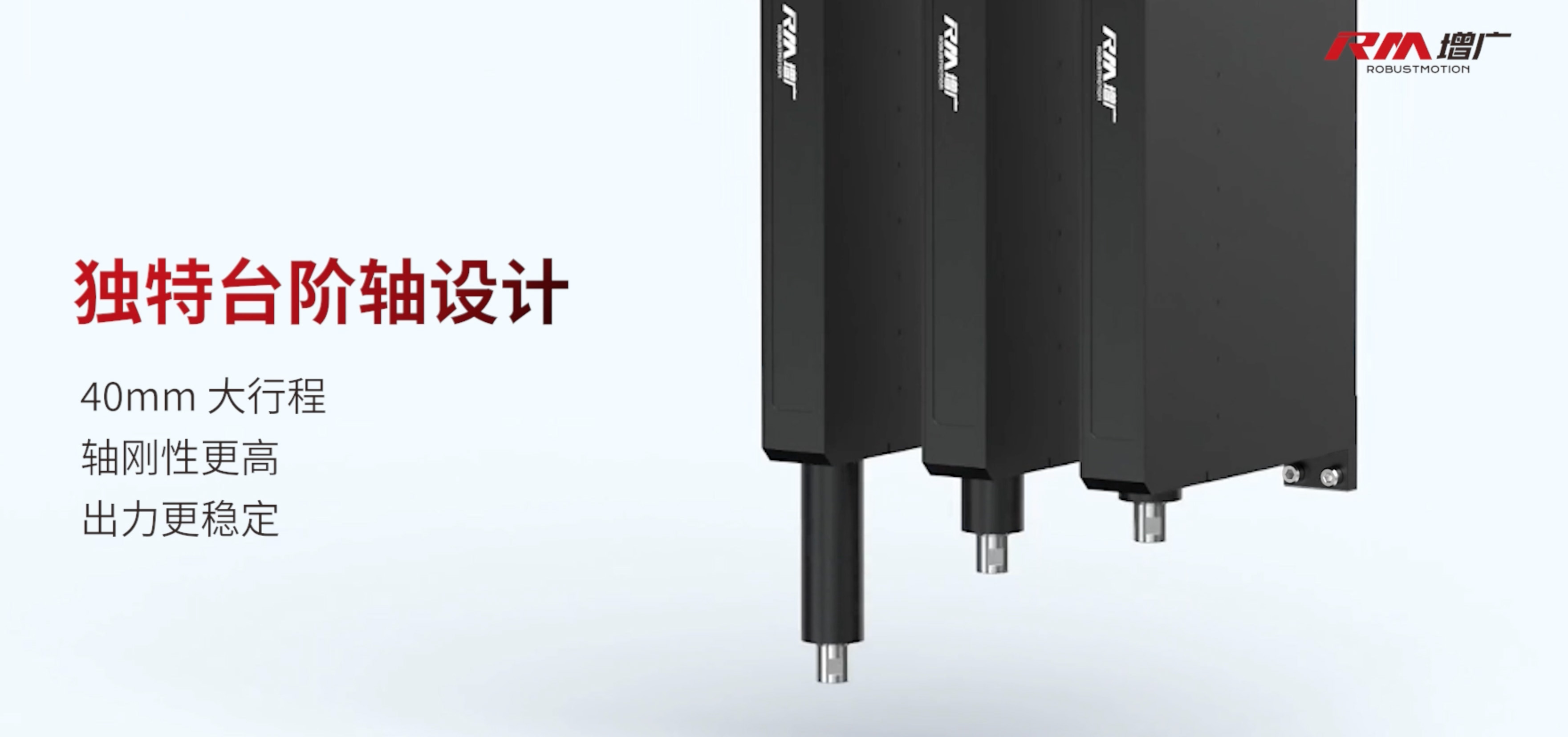
Born for high rigidity and high stability
Unique stepped-shaft design:This design significantly improves the overall rigidity of the execution shaft, so that deformation under lateral load is smaller. This ensures that within the large 40 mm stroke range, output remains stable and reliable no matter how far the shaft extends, and effectively suppresses vibration, especially during high-speed motion.
Typical application scenarios
Semiconductor packaging: chip placement and flip-chip bonding,In such applications, the ZRS can perform the entire process of “die pick — rotary alignment — placement”. It uses Z-axis high-precision positioning and 0.003° rotary resolution to achieve precise alignment between chip and substrate; its coreforce-controlled soft landingfunction ensures that at the moment of contact with the substrate, placement is completed with a micro-force at the newton level, effectively avoiding impact and damage to expensive chips.
3C electronics assembly: camera module and precision connector assembly In the assembly of phone camera modules, lenses or sensors must be placed precisely at a specified depth (Z-axis) and angle (Raxis). The high-precision and high-rigidity design of the ZRS ensures assembly consistency. In the insertion and extraction of connectors such as FPC flat cables, the ZRS can likewise complete alignment and insertion through coordinated Z-R-axis motion, and its precise force control prevents excessive insertion force from damagingthe workpiece。
Automated testing: probe testing and functional knob testing In ATE (automatic test equipment), the ZRS can drive test probes. Its ±5 µm Z-axis repeat positioning accuracy ensures that probes contact the tiny test pads on a PCB stably and reliably. For functional knobs in automotive electronics or home appliances, the ZRS can precisely simulate the human action of “pressing down and rotating”, and by recording force and torque curves, quantitatively test the knob's detent feel, damping and service life.
The RM-ZRS linear-rotary actuatorintegrates high-precision linear and rotary motion, together with advanced force-position hybrid control capability, into one compact and reliable unit. It not only simplifies the mechanical structure of conventional Z-Rmotion systems, but also, with its outstanding performance, provides a powerful, flexible and efficient integrated solution for increasingly complex high-speed precision transfer tasks.
Frequently asked questions
Q1: When designing ZR-axis transfer, how can the structure be simpler and the accuracy higher?
A: The RM-ZRS integrated module replaces split stacking.An integrated linear-rotary actuator,with the Z-axis and R-axis highly integrated, has a more compact structure and higher accuracy.
Q2: In high-speed precision placement applications, how can impact-free contact with the workpiece be achieved?
A: Use an actuator with force-position hybrid control and a “soft landing” function. This function supports high-speed approach at the end, switches to precision force control mode before contact, and completes placement with a preset micro-force, avoiding impact damage.
Q3: Is the positioning of a linear actuator stable at the extended end??
A: Actuators with reinforced designs such as a “stepped shaft” offer better bending and vibration resistance, ensuring high positioning stability even at the end of a long stroke.