
MagiFloater
How to choose the right precision force control solution for your production line?
Published:
2026-03-20
In precision manufacturing, force-control requirements grow ever stricter, and a variety of technologies marketed as 'precision force control' have emerged on the market. Of these, direct-drive force control and sensor-based closed-loop force control are the two mainstream routes. Both deliver better force-control performance than conventional solutions, but their technical principles and suitable applications differ.
RobustMotion has launched a product series for each. Understanding their differences is the key to choosing the best solution for your application.
Direct-drive force control: efficient, precise 'indirect force' control
In RobustMotion's ZR linear-rotary actuator and other products, advanced direct-drive force control is used.
- Technical principle: by eliminating intermediate transmission elements such as reducers and ball screws, the electromagnetic force generated by the motor acts directly on the output. The magnitude of force is achieved by controlling the motor input current. With mechanical friction and backlash removed, the current-to-force relationship is far more linear, delivering more accurate force control than conventional solutions.
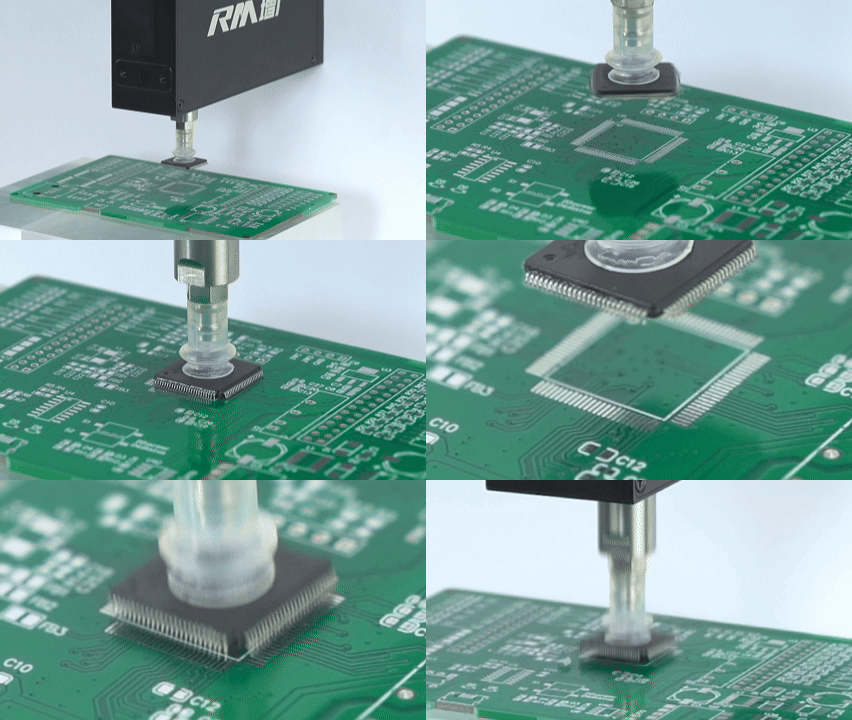
- Suitable scenarios: direct-drive force control responds quickly, has a simple structure and keeps cost manageable, making it very suitable for situations where operating conditions are relatively stable and absolute force accuracy is not extremely demanding. For example, in standardized pick-and-place, high-speed component insertion and light-load constant-force pressing, it is a highly cost-effective high-performance solution.
Closed-loop force control: 'direct force' control based on real feedback
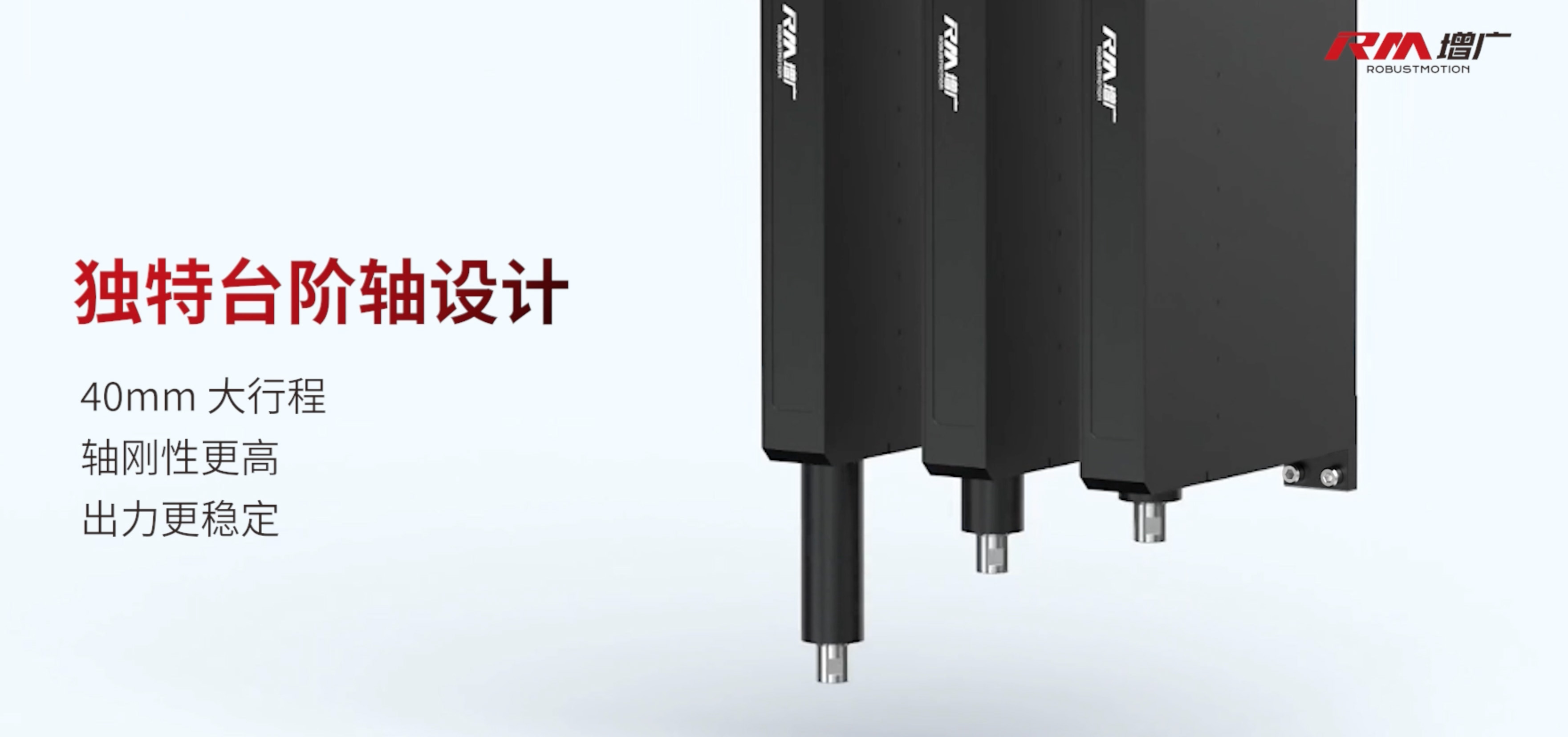
When an application demands strict force accuracy and interference immunity, the SoftForce®precision force-controlled electric gripper uses closed-loop force control technology, which therefore becomes the first choice.
- Technical principle: the core idea is 'what is sensed is what you get'.。We integrate at the actuator output a high-precision force sensor that works like a sensitive 'tactile nerve', measuring at very high frequency the real-time contact force with the workpiece. That value is fed back to the controller at high speed and compared with the target force; the controller then, through its SoftForce®core algorithm, adjusts the motor output in real time so the actual force tracks the target force precisely.
- Suitable scenarios: for applications such as chip packaging, optical lens assembly, flexible flat-cable pressing and stiffness testing of precision parts that are high-value, force-sensitive and subject to complex, changing conditions,closed-loop force control is the ideal choice for safeguarding yield and process consistency.
- Core advantages: because it involves real force being measured and regulated directly, it not only offers extremely high accuracy but, more importantly, provides strong self-adaptation and interference immunity. Whatever the shape of the workpiece or the hardness of the material, the system compensates automatically and quickly, always keeping force output constant.
Technical feature comparison
|
Feature |
Direct-drive force control (e.g. ZR series) |
Closed-loop force control (e.g. precision force-controlled gripper) |
|
Control method |
Force is controlled indirectly through current regulation |
Force is controlled directly through sensor feedback |
|
Feedback loop |
Current-loop feedback |
Force sensor closed-loop feedback |
|
Interference immunity |
Relatively limited; affected by external conditions |
Automatically compensates for external changes |
|
Core advantages |
Fast response, high cost-effectiveness, balanced performance |
High accuracy, strong stability and wide adaptability |
|
Suitable scenarios |
Stable conditions, high speed, medium-to-high accuracy requirements |
Force-sensitive applications, varying conditions, extreme accuracy requirements |
Direct-drive force control and closed-loop force control do not replace each other; they are the best choice for different application tiers.
As an industry leader, RobustMotion masters and supplies both mainstream technical approaches. It studies customers' real process needs in depth and, evaluating across performance, cost and scenario complexity and other dimensions, recommends and delivers the most appropriate solution for each customer.