
MagiFloater

What Is the Difference Between Stroke and Lead? A Quick Selection Guide for Electric Actuators
Published:
2026-07-22
Abstract: Stroke determines how far an electric actuator can move, while lead describes the linear displacement produced by one revolution of the screw. When selecting a model, first determine the stroke from the working range, then choose the lead based on speed and thrust requirements.
In electric actuator selection, both 'stroke' and 'lead' are commonly expressed in millimeters, yet they mean entirely different things. Confusing these two parameters can result in insufficient travel range, substandard speed, or inadequate thrust.
1. What Are Stroke and Lead?
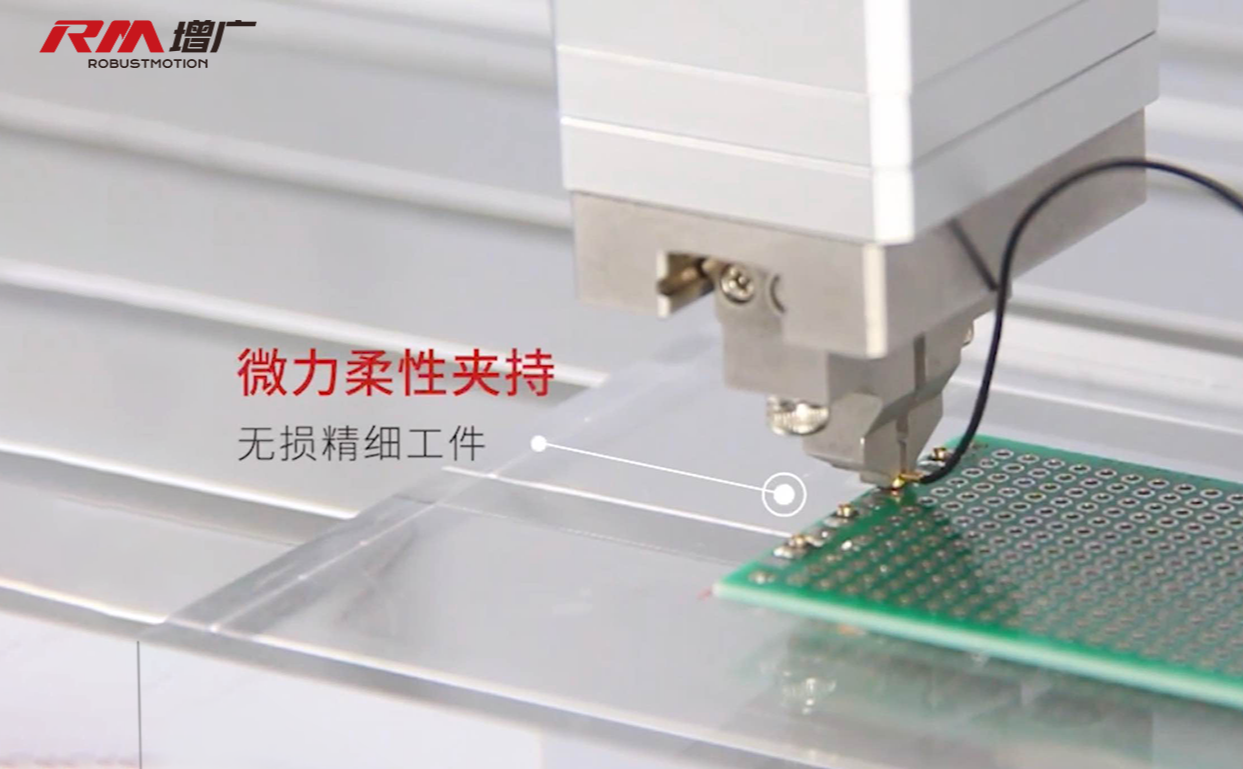
Strokeis the distance the actuator's moving part travels from one valid limit position to the other, determining how much working range the actuator can cover. For an electric push rod, it is the effective distance the rod can extend or retract; for an electric gripper, it is the range over which the fingers can open and close.
Leadis the linear displacement produced by the push rod or slider when the screw rotates one full turn. Lead mainly affects the actuator's speed and thrust performance.
In simple terms:Stroke answers 'how far can it go', while lead answers 'how far per revolution'.
2. How to Choose the Stroke
Electric grippers
First confirm the largest and smallest workpiece sizes that must be accommodated, then check whether the gripper's opening range covers those sizes, while allowing for workpiece tolerance, positioning error, and safety margin.
Note that different manufacturers may define gripper 'stroke' differently: some mean the travel of a single finger, some mean the total travel of both fingers moving relative to each other, and others simply state the maximum and minimum opening. When selecting, never rely on a single stroke figure; confirm it against the dimension drawing.
Electric push rods
Rod stroke should cover the complete process displacement, including fast approach, the working stroke after contact, the retract distance, and necessary commissioning allowance. More stroke is not always better: excessive stroke increases body length and installation space. Meeting the process requirement with a reasonable allowance is enough.
3. How to Choose the Lead
With comparable motors and transmission structures:
When thrust is the priority, a smaller lead is usually selected.This suits processes with high thrust requirements, such as press-fitting, lamination, and holding pressure.
When speed is the priority, a larger lead is usually selected.This suits high-takt processes such as high-speed pick-and-place, material handling, and rapid inspection.
When both speed and thrust matter, compare specific models.Do not judge on 'large lead' or 'small lead' alone.
4. Four Points to Remember When Selecting
- Set the stroke first, then choose the lead.Stroke follows the working range; lead follows speed and thrust.
- Confirm the definition of each parameter.For grippers in particular, distinguish single-finger stroke, two-finger total stroke, and opening range.
- Do not look only at maximum speed.Actual takt is also affected by load, acceleration and deceleration, and settling time.
- Check against the specific model.Within the same series, speed, thrust, and permissible load can differ markedly between lead options.
A correct understanding of stroke and lead lets you quickly rule out unsuitable specifications; the final choice, however, still requires comprehensive judgment based on workpiece size, installation space, load, takt, and process requirements.