

MagiFloater

Open and Compatible: How RobustMotion Actuators Integrate Seamlessly into Your Automation System
Published:
2025-12-05
Keywords: electric actuator compatibility, industrial communication protocols, EtherCAT, PROFINET, robot integration, visioninspection, open control, RobustMotion
Article summary: This article systematically explains the core design principles of RobustMotion's full range of electric actuators in terms of openness and compatibility. It describes their seamless adaptability to various robot systems and focuses on native support for industrial communication protocols such as EtherCAT, PROFINET and Modbus, as well as their collaborative working mechanisms with intelligent ecosystems such as vision systems and force sensors. The article aims to provide automation engineers with a practical reference for actuator system integration and open ecosystem connectivity.
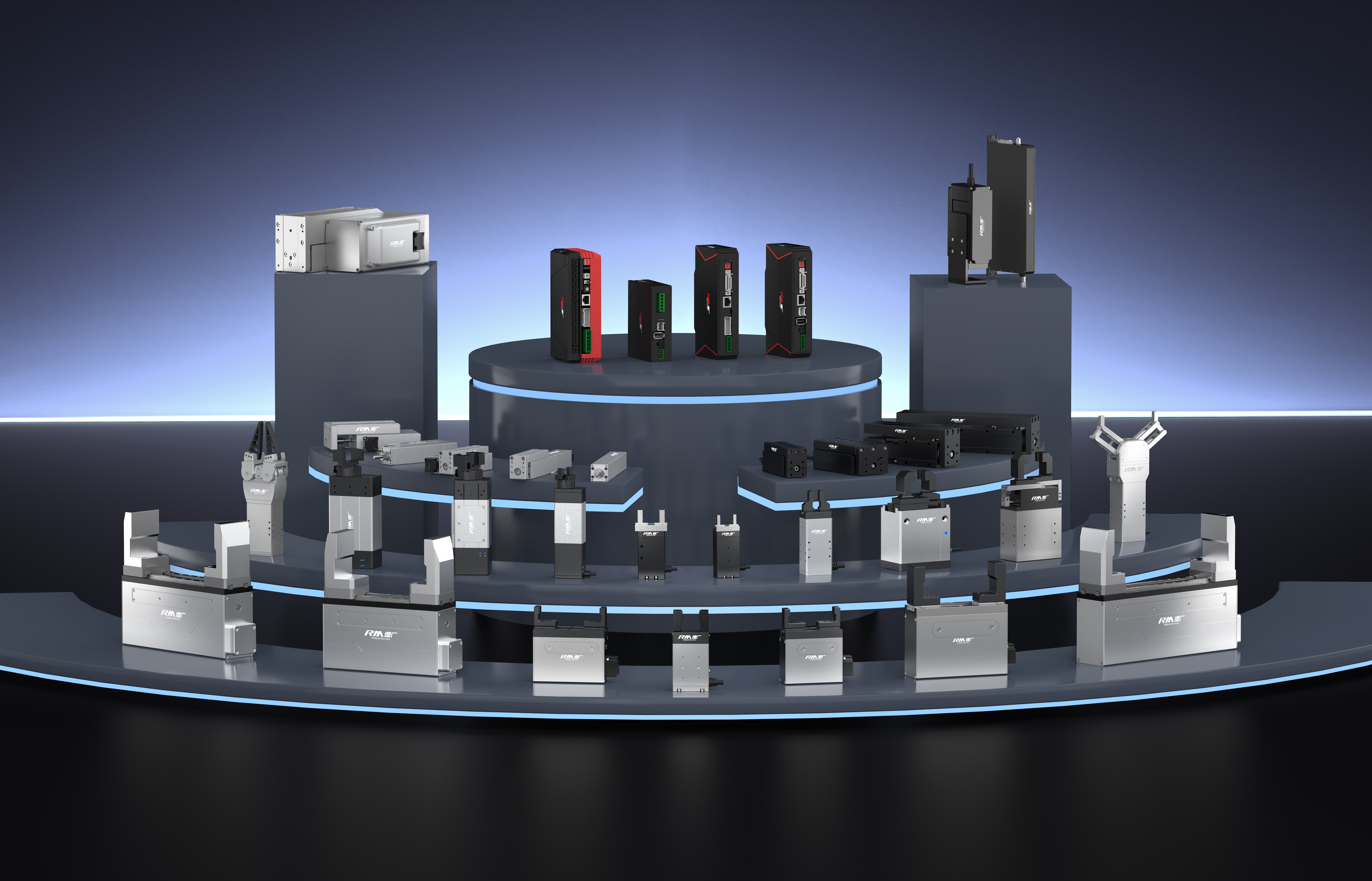
RobustMotion's full range of electric actuators (includingelectricgrippers,electricrotary grippers,、electricpush rods,direct-driveactuatorsand more) have taken openness and broad compatibility as core principles from the very beginning of their design, aiming to provide maximum convenience for users' system integration.
Compatiblewith all majorcontrolsystembrands:fullcompatibilityand matching
Whether simple stand-alone equipment or complex automated production lines, RobustMotion actuators can match yourautomationcontrolsystemandmatch perfectly。
Mainstream PLC brands: full support for major domestic and international PLC brands such as Siemens, Mitsubishi, Omron, Rockwell and Inovance.
Industrial PCs and host systems: a complete SDK/API makes it easy for users to perform secondary development in PC-based control systems (for example developed in C# or Python) to achieve deep customization.
This broad controller compatibility benefits from our comprehensive support for mainstream industrial communication protocols.
Native support for mainstream communication protocols
RobustMotion controllers offer a rich choice of communication interfaces, ensuring you can always find the connection method best suited to your system architecture:
Industrial Ethernet: native support for high-speed industrial Ethernet protocols such as EtherCAT, PROFINET and EtherNet/IP, enabling high-speed, real-time communication withvariousPLCs and robot controllers.
Industrial buses: support for the widely used Modbus RTU/TCP and CANopen、CC-Link and other bus protocols, with convenient integration, reliability and stability.
Traditional control methods: I/O and pulse control are also retained, convenient for simple applications or quick replacement of conventional actuators.
This comprehensive protocol support means users need no third-party gateway during integration, truly achieving “plug and play” and greatly reducingwiring,、commissioning,、upkeep,maintenanceand othertimeandlaborcosts。
Collaboration with various intelligent ecosystems
Vision systems: the actuators can easily receive positioning and inspection commands from majormainstreamvision brands or open-source vision libraries (such as OpenCV), achieving precise “eye-hand coordination” for vision-guided gripping, assembly and inspection.
Force, acoustic, displacement and other sensingsystems: through open interfaces, our actuators can respond to signals from external force sensors, acoustic sensors, laser displacement sensors and more, performing complex triggering or closed-loop control tasks.
Broad adaptability to various robot systems
As an end effector, we have accumulated a large number of successful cases of joint debugging and application with various robots,Fullycompatibleand adaptable with ABB, KUKA, YASKAWA, FANUC and otherlargeindustrialrobots,,as well asmost of thecollaborativerobotson the market、SCARA、and DELTA robotsand otherbrands。
RobustMotion always insists on using self-developed advanced control technology to drive actuator hardware to work more and more like a human hand — “smartly” and with “both firmness and gentleness”. What we provide is not just a hardware product, but an open, easy-to-integrate intelligent actuation platform.
Frequently asked questions
Q1: For precision gripping or assembly applications requiring vision guidance, how should the actuator work together with the vision system?
A: Choose an actuator that provides an open API or SDK interface. By receiving the coordinates or inspection signals output by the vision system, the actuator can achieve precise “eye-hand coordination” and complete vision-guided positioning, gripping and assembly actions.
Q2: When control cabinet space is limited, how can the communication integration and wiring of electric actuators be simplified?
A: Choose actuators that natively support the target industrial protocol and offer flexible cable outlet options. Eliminating the external gateway greatly reduces the number of hardware items and wiring complexity, while multiple cable outlet options make it easy to adapt to compact equipment layouts.
Q3: How can electric actuators be seamlessly integrated with industrial robots such as ABB and KUKA?
A: Choose actuators that support the industrial protocols commonly used by the corresponding robot brand (such as EtherCAT or EtherNet/IP). Through standardized protocol connection, efficient communication between the actuator and the robot controller can be achieved, completing complex automation tasks as an end-of-arm tool.












