

MagiFloater

Technical Analysis of Flexible Maglev Conveyor Lines: Are Linear Drive and Planar Drive the Same?
Published:
2026-04-16
In industrial automation, conveyor lines are undergoing a fundamental shift from mechanical transmission to electromagnetic drive. Conventional belt, chain, and roller conveyor systems face bottlenecks such as limited flexibility, limited precision, and frequent maintenance, and the introduction of maglev technology offers a new solution. On the market today, however, the term 'maglev conveyor line' covers two fundamentally different technical forms: one is rail-constrained linear magnetic drive systems, often calledmagnetic direct-drive conveyor lines,and the other is trackless maglev systems based on planar motors, namelyplanar maglev.The two differ fundamentally in structural principle, performance characteristics, and applicable scenarios. This article reviews them systematically across three dimensions: technical mechanism, industrial application, and development trends.
1. Technical Principles and Structural Characteristics
Linear maglev / magnetic direct-drive conveyor linesare essentially multi-mover linear motor systems. The principle can be understood as a rotary servo motor 'cut open and laid flat': the stator is extended into a fixed track with multiple sets of electromagnetic coils arranged inside, while the mover (carrier) contains a permanent magnet array. The controller energizes the coils in sequence to create a traveling magnetic field, driving the mover along the track.
These systems retain a mechanical guide structure: the mover physically contacts the track through sliders or rollers for support and guidance, and magnetic force is used only to generate propulsion rather than full levitation. Strictly speaking, therefore, most'magnetic drive conveyor lines' belong to magnetic direct drive rather than full maglev.Their degrees of freedom are confined to the track layout; loop lines, straight transfer lines, or branching and merging networks can be built, but movers cannot leave the track constraint.
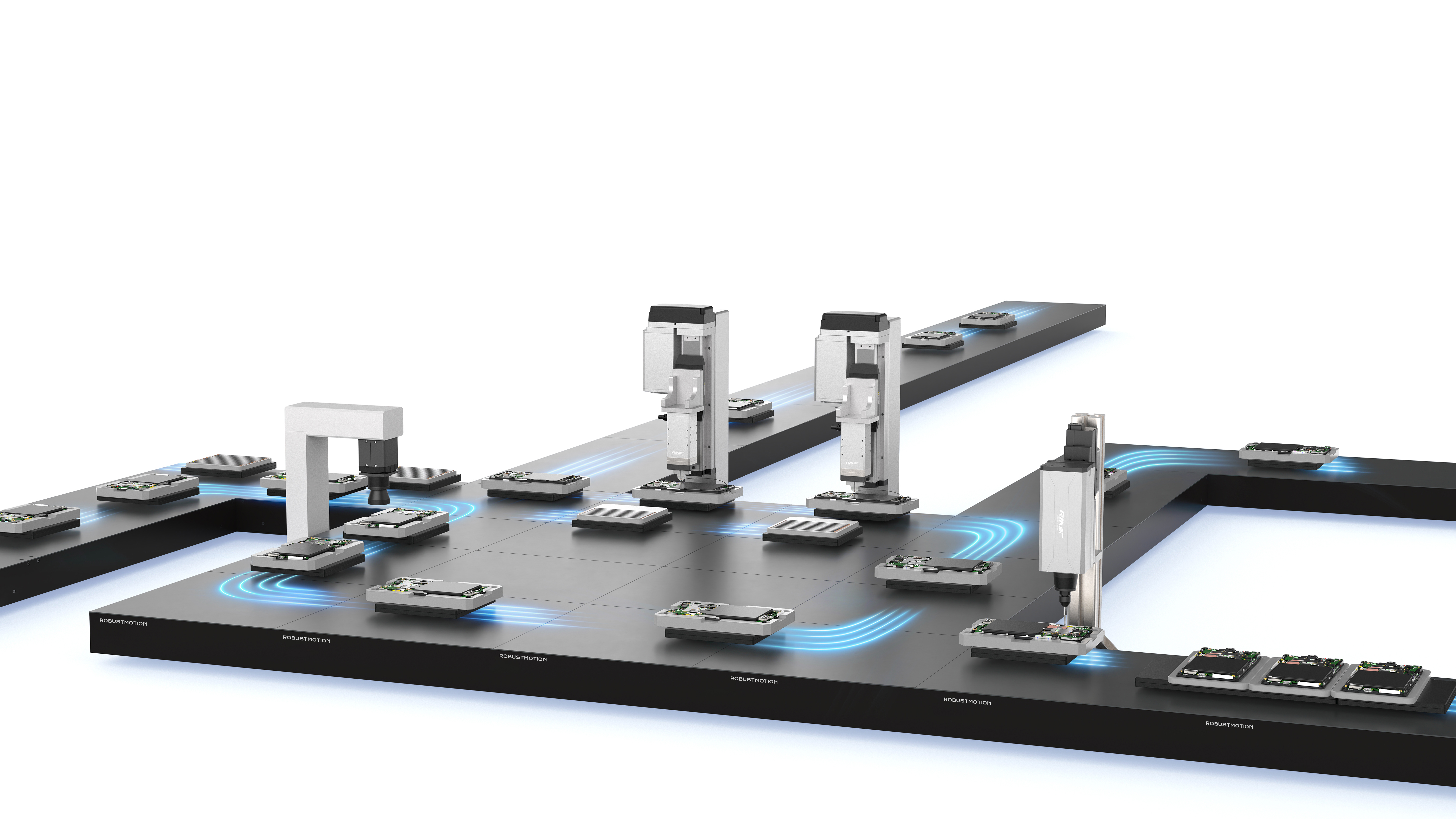
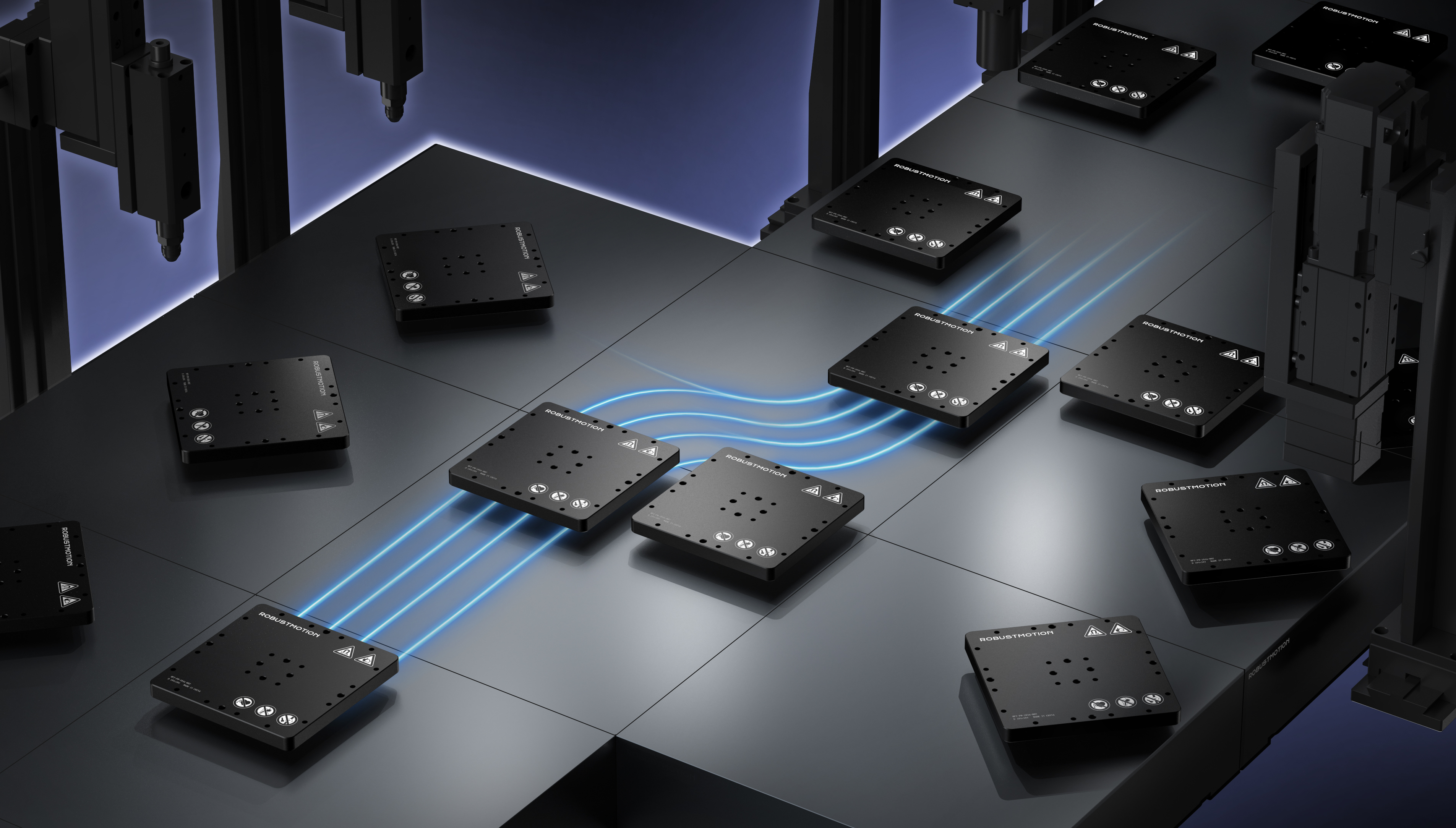
Planar maglev conveyor linesrepresentgenuine non-contact levitation technology.The system is assembled from modular planar motor units (a common size being 262 × 262 mm, as in RobustMotion's MagiFloater® Planar Motor System) into a working plane of any shape. Electromagnetic fields generate propulsion in the X and Y directions and levitation in the Z direction within the plane. The carrier (mover) levitates 0.5-5 mm above the plane and achieves six-degree-of-freedom motion without any mechanical support: translation forward, backward, left, and right; vertical lifting; and rotation in pitch, yaw, and roll.
This technology originates from the precision motion stages of semiconductor lithography machines, and its control core lies inreal-time decoupling of multi-dimensional electromagnetic force vectors.The system must simultaneously control propulsion within the horizontal plane and levitation in the vertical direction, and any disturbance must becompensated in real time by high-frequency closed-loop control,making the technical complexity far higher than that of linear systems.
2. Comparison of Core Performance
The two technologies show clear differences in engineering parameters, forming complementary technical systems:
| Performance dimension | Linear magnetic drive conveyor line | Planar maglev conveyor line |
| Motion constraints | Runs along a fixed track (1D or constrained 2D) | Free motion within the plane (2D) plus rotation (3D) |
| Support method | Mechanical guide rail support; magnetic force only drives | Fully levitated by electromagnetic force; zero mechanical contact |
| Speed capability | Up to 6 m/s, acceleration up to 10 G | Medium and low speed, focused on precision positioning |
| Cleanliness | Low friction but still mechanical contact | Fully non-contact, no mechanical friction dust |
| System flexibility | Tracks can be modularly reconfigured | Plane can be assembled in any shape; paths fully software-defined |
| Technology maturity | Commercially mature, already applied at scale | Early commercialization, being introduced in high-end scenarios |
| Relative cost | Close to high-end conventional conveyor lines | Higher than linear magnetic drive |
These differences mean the two are not substitutes but specialized tools for different manufacturing scenarios. Linear systems show engineering practicality in heavy-load, high-speed, large-area conveying; planar systems demonstrate technical superiority in precision, cleanliness, and flexible process integration.
3. Industrial Application ScenariosApplicability
Large-Scale Application of Linear Magnetic Drive Conveyor Lines
In recent years, with many linear motor manufacturers entering the field, linear magnetic drive technology has begun achieving large-scale replacement across several industrial sectors. Inlithium battery manufacturing,conventional conveyor lines tend to generate mechanical vibration during acceleration and speed changes, affecting cell consistency. Magnetic drive lines, with independent movers under precise control, can transport battery modules weighing tens of kilograms smoothly and dynamically adjust station spacing and mover count according to capacity requirements,achieving 'flexible changeover' on the line.。
Inautomotive manufacturing,magnetic drive lines are used for assembly transfer of heavy components such as engines and transmissions. Compared with conventional double-speed chains, they need no periodic belt or chain replacement, greatly extending maintenance intervals. In addition, in pharmaceutical powder injection filling, 3C electronics soldering, and similar scenarios, the high positioning accuracy and asynchronous control capability of magnetic drive lines (different movers can run at different speeds simultaneously) significantly improve overall equipment efficiency.
High-End Precision Applications of Planar Maglev
Planar maglev is currently concentrated in high-end scenarios with extreme requirements for cleanliness and flexibility. Insemiconductor manufacturing,wafer transfer between lithography, cleaning, CMP (chemical mechanical polishing), and other processes must meet Class 1 cleanroom standards. Lubricating grease and friction particles from conventional mechanical conveying are major contamination sources, and the fully non-contact nature of planar maglev fundamentally reduces this risk. More importantly, the levitating wafer carrier can, within the horizontal plane,rotate 360 degrees,working with process equipment to complete multi-sided processing — a capability conventional rail-based conveying can hardly achieve.
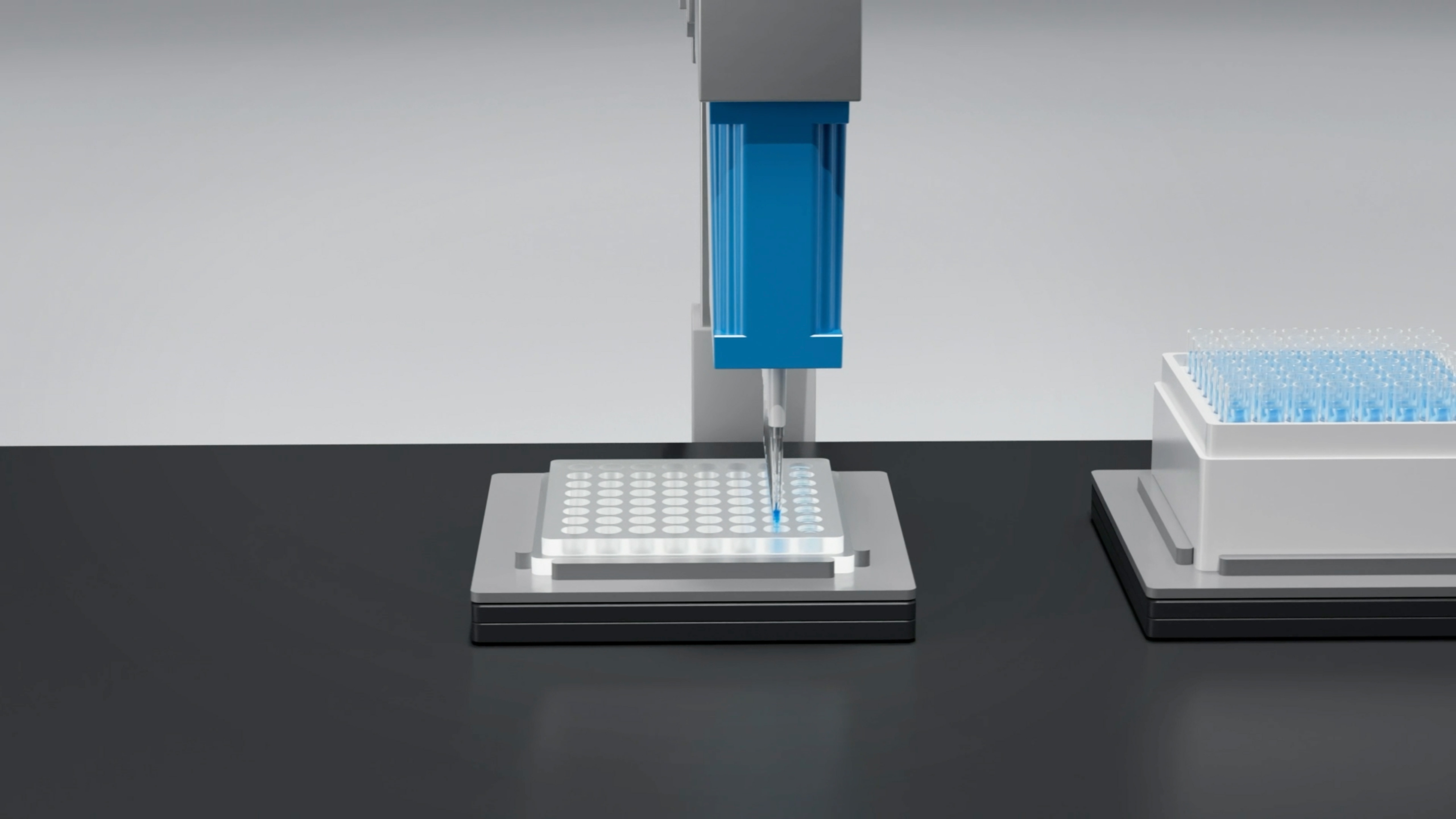
Inbiomedical,the technology is used in vaccine testing, cell culture, and insulin pump assembly. It not only meets sterility requirements but also supports'digital parameter carrying':each levitating carrier can independently record and carry process parameters (such as temperature, culture time, and batch information), keeping data intact through complex planar routing and enabling full traceability. In food filling and cosmetics packaging, the 'magic carpet' layout of planar maglev allows station spacing to be adjusted dynamically within the same plane, accommodating high-mix low-volume production, and the entire system can be fully washed down (CIP), meeting FDA certification requirements.

4. Technology Evolution and Industry Trends
Looking at the technology trajectory, linear magnetic drive systems have entered maturity and are transitioning from 'technology validation' to 'cost optimization'. With the maturing of domestic supply chains, they are already economically viable for fully replacing conventional conveyor lines in heavy-load scenarios such as lithium batteries and automotive.
Planar maglev, by contrast, is in its 'commercial introduction phase'. Its technical complexity (six degrees of freedom, real-time scheduling) and material costs (high-precision sensors, high-performance magnetic materials) keep unit prices relatively high, and it is currently used mainly inhigh-value-added industries such as semiconductors and medical care,at bottleneck processes rather than across entire lines. As control algorithms improve and modularity increases, however, costs are expected to come down gradually, expanding towardprecision electronics assembly and high-end daily chemical packaging,and other fields.
The essence of maglev conveyor linesis replacing the rigidity of mechanical transmission with the flexibility of electromagnetic fields.Linear magnetic drive systemsachieve flexible heavy-load, high-speed conveying through 'tracked magnetic direct drive' and are the mainstay technology of industrial automation today; planar maglev achieves a high degree of process equipment integration through 'trackless six-degree-of-freedom levitation' and represents the evolutionary direction of flexible manufacturing.
For industrial users, understanding the technical boundary between the two — the former strong in load and speed, the latter in cleanliness and flexibility — is the basis for technology selection. As localization deepens,maglev conveyor linesare shifting from a high-end optional configuration to infrastructure for smart manufacturing, and their technical value will be validated in more industrial scenarios.












